What are Warehouse Automation Solutions?
Are you tired of errors and inefficiencies in your warehouse? Warehouse automation could be the answer.
Warehouse automation solutions use technology and systems to automate and optimize warehouse operations. This can improve efficiency, reduce errors, and increase productivity.
Want to learn more about how automation can transform your warehouse? Keep reading!
What is Warehouse Automation?
Do you feel like your warehouse is stuck in the past? It might be time to consider automation.
Warehouse automation is automating the movement of inventory in, within, and out of warehouses with minimal human assistance. It eliminates labor-intensive tasks involving repetitive physical work and manual data entry.
Let's dive deeper into what warehouse automation really means.
Why Automate?
Think about the daily grind in your warehouse. How much time is wasted on repetitive tasks? Automation can address many challenges.
- Increased Efficiency: Automation makes warehouse operations faster and more accurate. By replacing human touch points with automation, things in the warehouse will move much faster.
- Reduced Costs: Automation cuts costs by saving on labor, operations, and handling.
- Improved Safety: Automation reduces the need for employees to engage in risky activities, leading to fewer accidents.
- Better Space Utilization: Automated systems can help companies make better use of warehouse space.
- Fewer Mistakes: Automation greatly reduces human errors, leading to more accurate operations.
- Happier Customers: By improving efficiency and reducing errors, warehouse automation can lead to happier customers.
What are the 4 Types of Automation?
Are you wondering what different kinds of warehouse automation exist? There are several high-level categories to consider when designing and implementing automation.
The main types of warehouse automation are material handling, inventory management, order fulfillment, and data analytics.
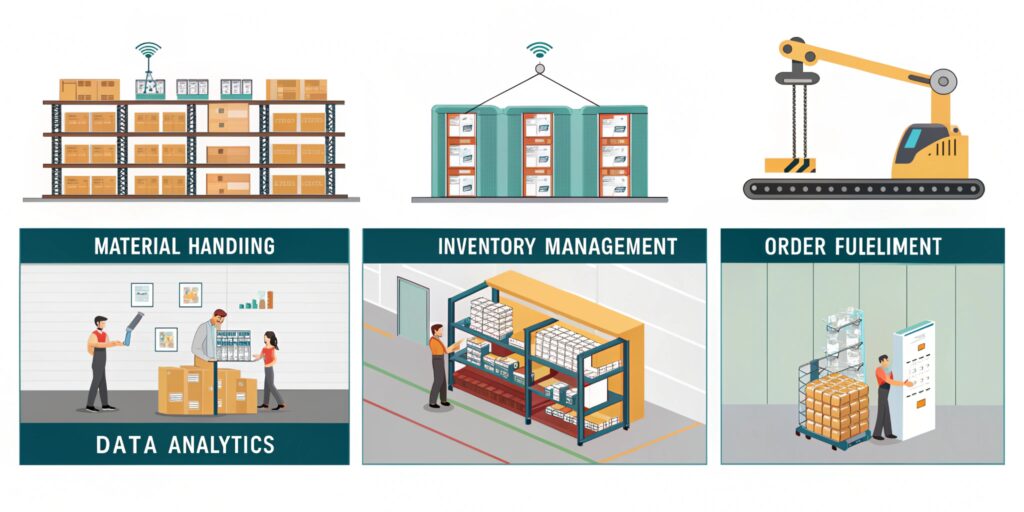
Let's explore each of these automation types in more detail.
Breaking Down the Automation Types
To truly understand warehouse automation, it's important to break down the different types and what they offer.
| Automation Type | Description | Examples |
|---|---|---|
| Material Handling | Includes systems that move and transport goods within a warehouse, reducing labor. | Conveyor systems, automated guided vehicles (AGVs), autonomous mobile robots (AMRs). |
| Inventory Management | Enables greater inventory accuracy and more sophisticated operations through better use of data, enhanced location management, and reduced errors. | Warehouse management systems (WMS), automatic identification and data capture (AIDC), barcode scanning, RFID. |
| Order Fulfillment | Reduces labor, increases order accuracy, and enhances customer experience. | Goods-to-person (GTP) systems, light-directed picking, robotic picking, automated print and apply (PandA). |
| Data Analytics | Uses data and software to reduce manual workflows and eliminate human errors. It integrates with other solutions to efficiently manage and automate tasks across different business and supply chain functions. | AI-powered analytics, data science, digital warehouse optimization. |
Consider a scenario in my own experience. At EQS, we helped a client integrate a WMS with their existing ERP system. Before, they struggled with inaccurate inventory counts, leading to frequent stockouts and delays. After implementation, their inventory accuracy improved, and order fulfillment times decreased significantly. This shows how the right combination of automation can solve real-world problems.
What is Meant by Automation Solutions?
Are you unsure about what "automation solutions" really means in the context of a warehouse? It's more than just buying a few robots.
Automation solutions refer to the technologies and systems used to minimize human intervention in warehouse tasks. These solutions aim to streamline processes, improve accuracy, and boost overall productivity.
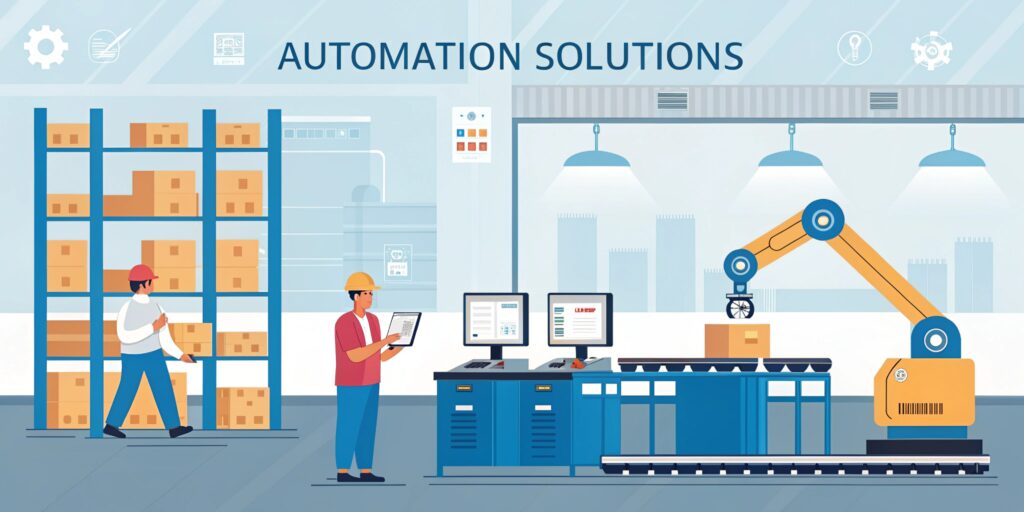
Let's explore some specific examples of automation solutions.
Real-World Automation Examples
To make this more concrete, let's consider some real-world examples of automation solutions in action:
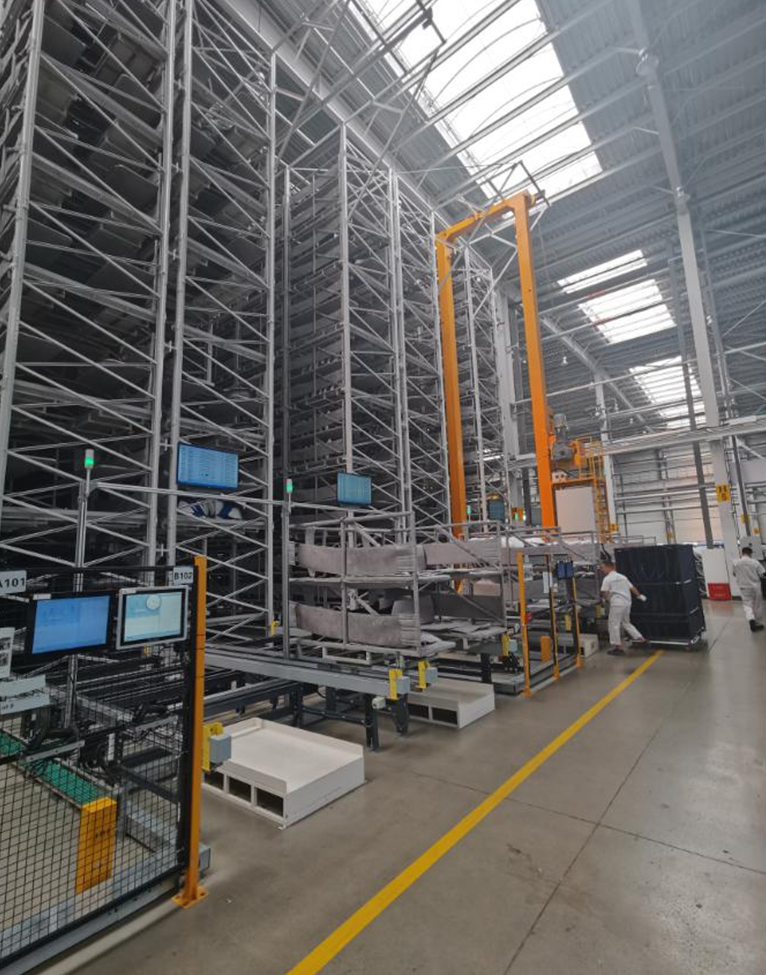
- Automated Storage and Retrieval Systems (AS/RS): These systems use automated machines and software to manage and organize inventory within a warehouse. High-volume warehouses with space constraints tend to use AS/RS systems.
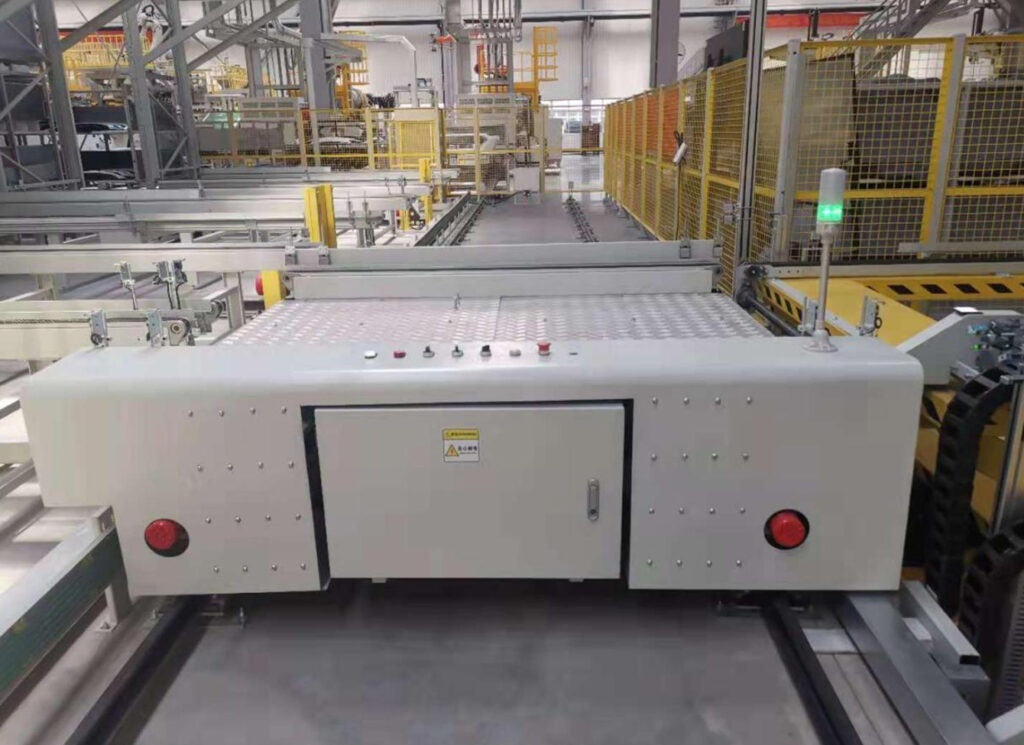
- Automated Guided Vehicles (AGVs): These vehicles use magnetic strips, wires, or sensors to navigate a fixed path through the warehouse.
- Autonomous Mobile Robots (AMRs): These robots use sensors, AI, and machine learning to navigate and operate independently.
- Conveyor Systems: These systems move pallets, boxes, or totes throughout a warehouse, reducing labor.
- Robotic Picking Systems: Robots are used for picking and packing tasks, handling various products and collaborating with human workers.
- Voice-Directed Picking: Workers receive real-time voice instructions on what items to pick and where to find them, optimizing picking routes and reducing errors.
I remember visiting a beverage factory in South America that implemented a full suite of EQS automation solutions, including robotic picking and AGVs. The result? They saw an increase in throughput and a significant reduction in labor costs. It was a powerful demonstration of how comprehensive automation can transform a business.
What are the Three Levels of Warehouse Automation?
Did you know that warehouse automation isn't an all-or-nothing game? There are different levels to consider, depending on your needs and budget.
The three levels of warehouse automation are basic, system, and advanced. Each level represents a higher degree of technology integration to improve efficiency, reduce manual labor, and streamline operations.
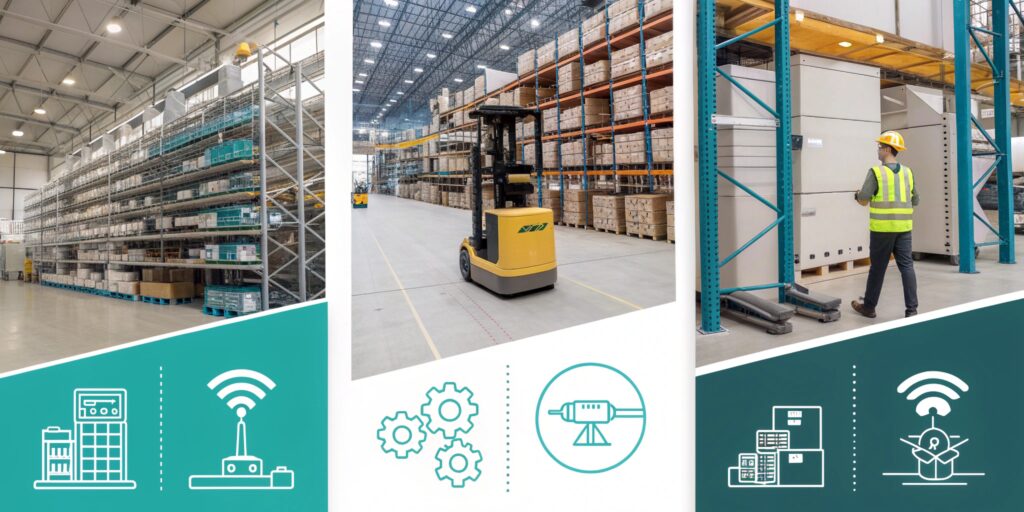
Let's take a closer look at each level and what it entails.
Understanding the Automation Levels
Choosing the right level of automation is crucial for maximizing ROI and achieving your warehouse goals.
| Automation Level | Description | Technologies | Cost |
|---|---|---|---|
| Basic | Simple tools and machines enhance manual processes, addressing repetitive, labor-intensive tasks. | Conveyor belts, barcode scanners, handheld devices for inventory management. | |
| System | More advanced technologies improve accuracy and optimize operations, integrating with other solutions. | Warehouse management systems (WMS), automated storage and retrieval systems (AS/RS), automated sortation systems, robotic assistance. | |
| Advanced | Highly sophisticated robotic systems and fully integrated warehouse management systems create near-complete or fully autonomous operations. | AI-powered systems, robotic picking systems, drones for inventory checks, machine learning algorithms. |
At EQS, we often advise clients to start with basic or system automation and gradually scale up as their needs evolve. For example, a client in North America initially invested in a WMS and conveyor system. Over time, they added AGVs and robotic picking to further optimize their operations. This phased approach allowed them to manage costs effectively while continually improving efficiency.
Conclusion
Warehouse automation solutions offer a way to optimize warehouse operations, improve efficiency, and reduce errors. By understanding the different types and levels of automation, businesses can make informed decisions to transform their warehouse and stay competitive.
My name is Allen, and I'm an expert in filling machine technology at EQS (eqsfilling.com), a leading liquid packaging solution provider based in shanghai China. If you're looking for top-quality filling machines for your production line, feel free to reach out to me at [email protected]. We specialize in providing customizable solutions with cutting-edge technology.