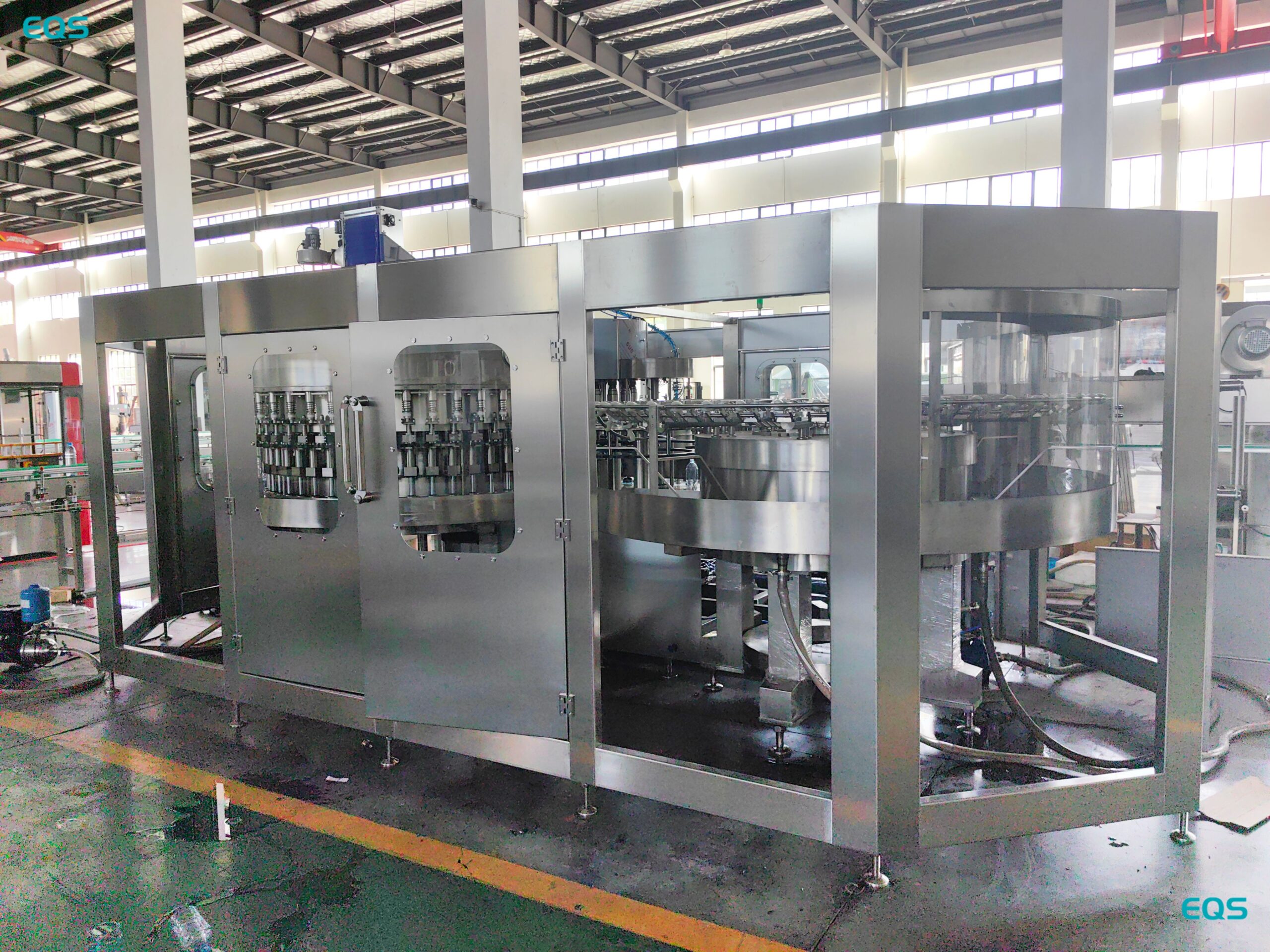
Is a Filling Machine Whole Made of Stainless Steel?
Looking at shiny filling equipment, you might assume everything is stainless steel. But is that really true? And does it even matter if some parts aren't? This uncertainty can be confusing when evaluating machine quality and hygiene.
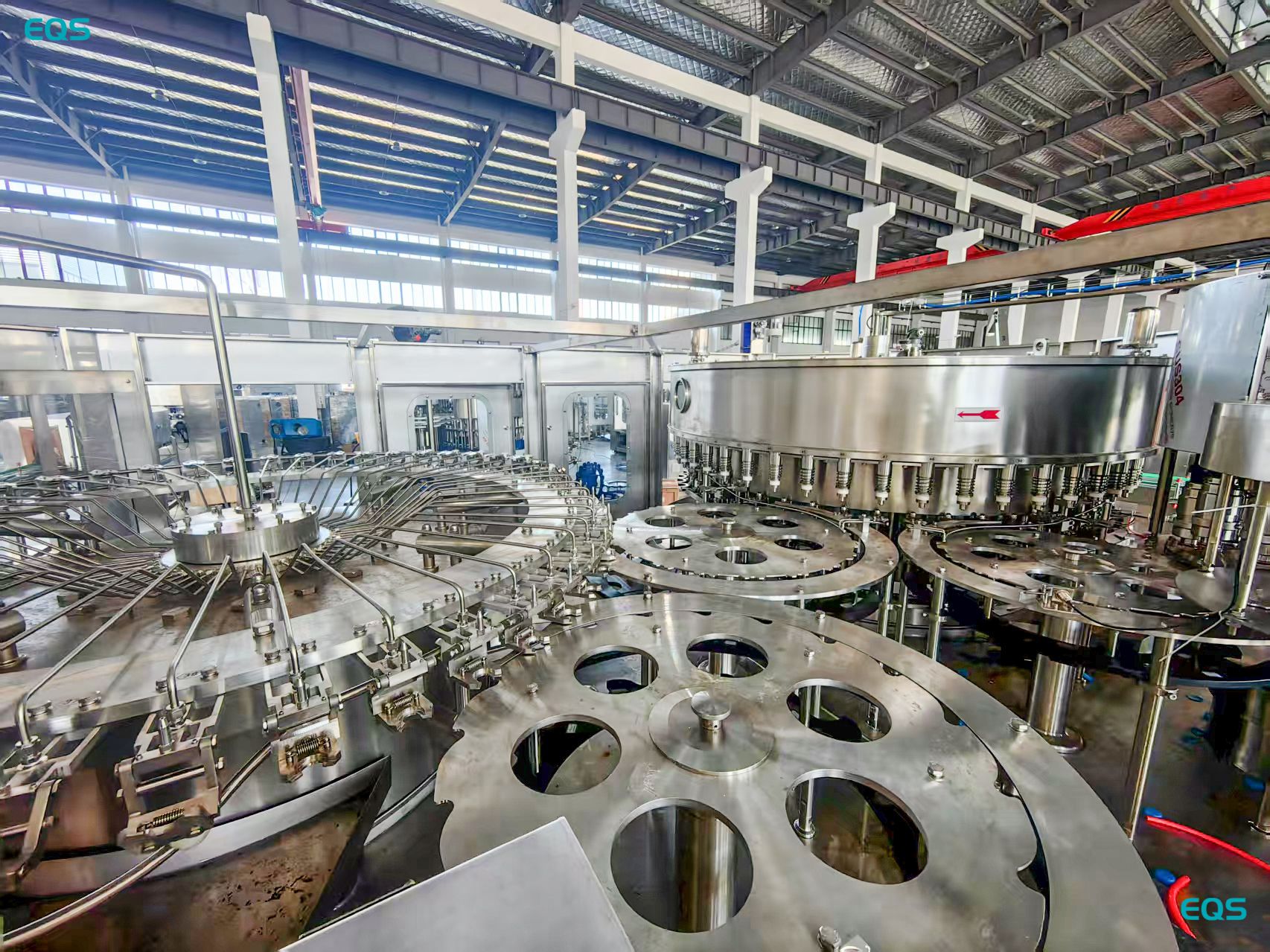
No, typically a filling machine isn't entirely stainless steel. Critical parts, especially those contacting the product, are high-grade stainless steel (like 304 or 316). However, frames, guards, or some electrical components might use other materials.
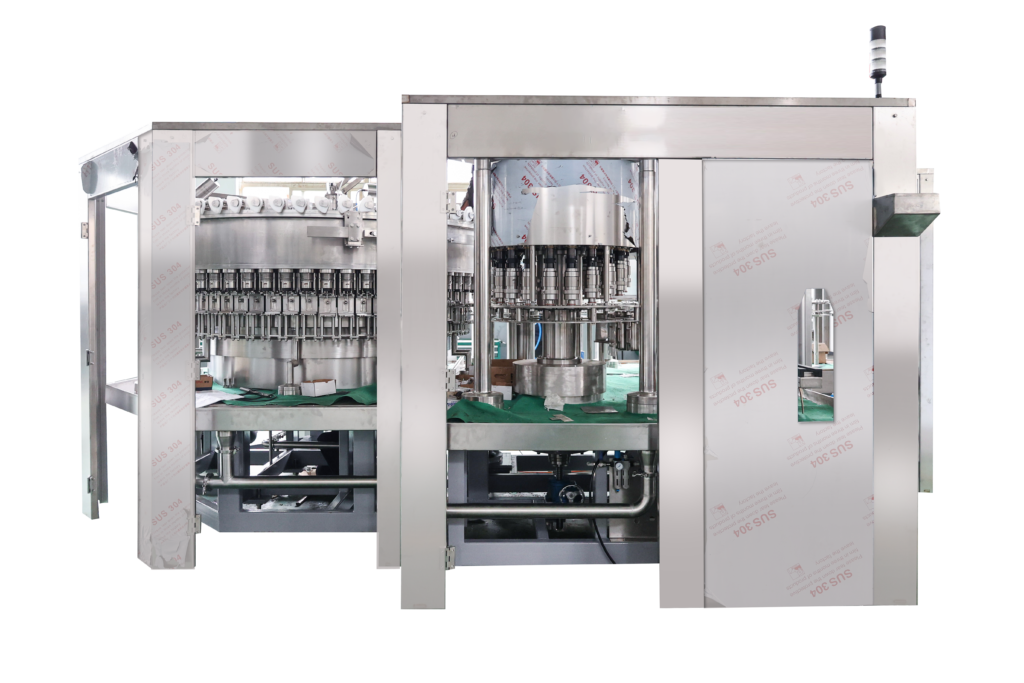
Understanding which parts need to be stainless steel and why helps you assess machine quality and suitability for your production needs. Let's explore the materials used and the filling process itself.
What types of stainless steel are used in filling machines?
You hear "stainless steel" often, but know there are different grades. Does the type used in a filling machine impact its performance, lifespan, or suitability for your specific beverage? Using the wrong grade could lead to issues later.
Food-grade filling machines primarily use Austenitic stainless steels, most commonly AISI 304 and sometimes AISI 316 (or 316L) for parts touching the product. We at EQS use 304 as standard and offer 316 for specific needs.
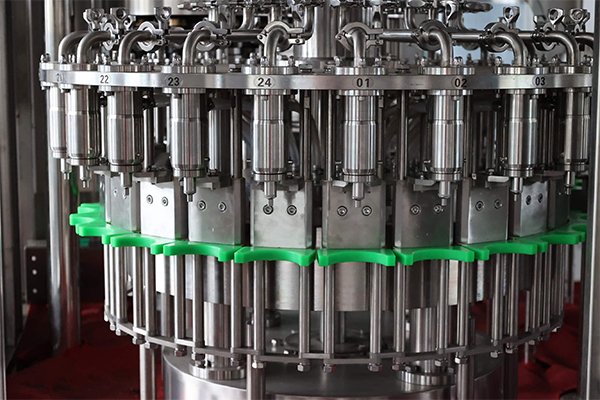
Dive Deeper: Understanding Stainless Steel Grades 304 and 316
Why the focus on these specific types? It comes down to hygiene, durability, and resistance to corrosion – all vital in the beverage industry.
-
AISI 304 Stainless Steel: This is the workhorse of the food and beverage industry. It contains approximately 18% chromium and 8% nickel.
- Pros: Excellent corrosion resistance against most oxidizing acids (like those found in many foods and cleaning agents), good formability and weldability, relatively cost-effective, and widely available. It's non-magnetic in its annealed state. It provides a smooth, non-porous surface that's easy to clean and sanitize, preventing bacterial growth.
- Cons: Can be susceptible to corrosion from chlorides (salts) and certain sulfur compounds.
-
AISI 316 Stainless Steel: This grade is a step up, containing similar amounts of chromium and nickel as 304, but with the crucial addition of about 2-3% molybdenum.
- Pros: Significantly enhanced corrosion resistance, especially against chlorides, brines, sulfuric acids, and high temperatures. This makes it ideal for more aggressive products (e.g., salty sauces, acidic juices) or environments with higher sanitation chemical concentrations. 316L has lower carbon content, making it better for welding.
- Cons: It's more expensive than 304 due to the molybdenum content.
EQS Standard vs. Special Requirements:
At EQS, we specify 304 stainless steel for all machine parts that come into contact with your beverage by default. This offers a great balance of hygiene, durability, and cost for most applications. However, if your product is particularly acidic, salty, or requires very high sanitation standards, we recommend upgrading the contact parts to 316 stainless steel. Yes, this adds to the cost, which is one reason our machines might be priced higher than some competitors – we prioritize using the right material for longevity and safety.
Verification: We stand by our material choices. If you have any doubts, you're welcome to bring a magnet when you visit our factory. High-quality 304 and 316 stainless steels are generally non-magnetic, unlike lower grades or regular steel.
| Feature | AISI 304 Stainless Steel | AISI 316 Stainless Steel |
|---|---|---|
| Key Elements | ~18% Cr, ~8% Ni | ~16-18% Cr, ~10-14% Ni, ~2-3% Mo |
| Corrosion Resist. | Good general resistance | Excellent, esp. against chlorides & acids |
| Common Uses | General food/bev processing, tanks, pipes | Harsher products, pharma, marine environments |
| Cost | Standard | Higher (due to Molybdenum) |
| Magnetism | Generally Non-magnetic | Generally Non-magnetic |
| EQS Default | Yes (for contact parts) | Available upon request |
What is the process of a filling machine?
Seeing a filling line in action can look like a complex dance of moving parts. How does a bottle go from empty to filled, sealed, and ready for packing? Understanding the steps helps appreciate where machine design and materials really matter.
The core process involves guiding empty containers, precisely filling them with the product, and then securely sealing or capping them. Each step requires specific mechanisms working in sync for efficiency and accuracy.
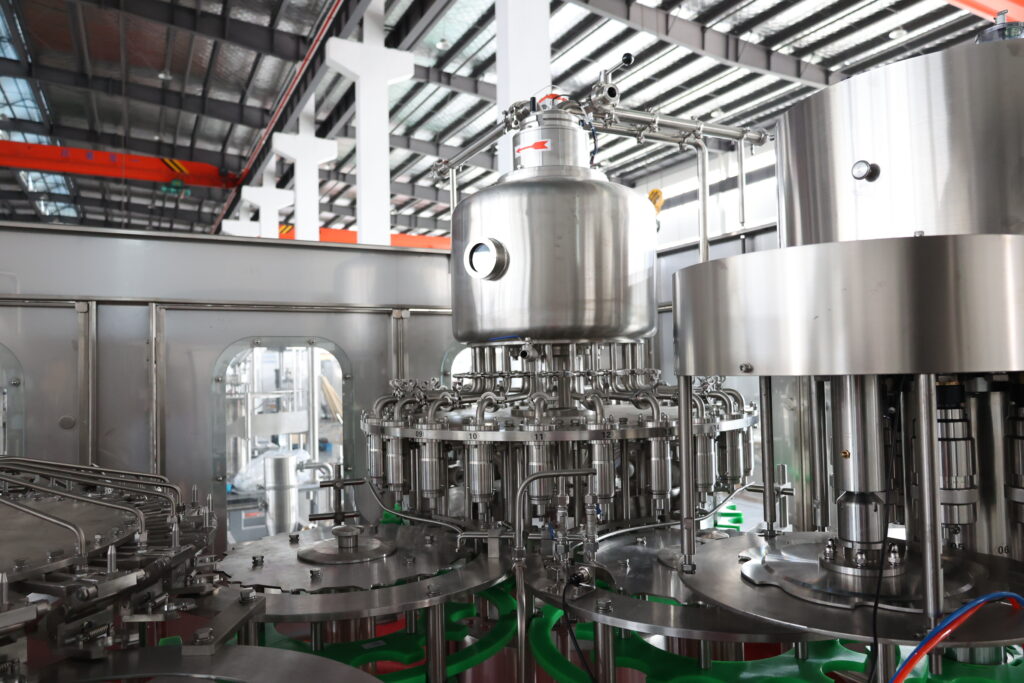
Dive Deeper: Key Stages in Automated Filling
While specifics vary based on product (liquid, viscous, carbonated) and container type (bottle, can, jar), a typical automated filling process includes these key stages:
-
Container Infeed and Handling: Empty containers arrive via conveyor belts. Mechanisms like timing screws, star wheels, or grippers precisely space and guide them into the machine. This ensures smooth, continuous movement without jamming. Materials here might be stainless steel or durable plastics designed for low friction.
-
Container Cleaning/Rinsing (Optional but Common): Especially for beverages, containers may pass through a rinsing station. Air jets might blow out dust, or nozzles might spray water or a sanitizing solution inside, which is then drained. Rotary rinsers often use stainless steel grippers and nozzle assemblies for hygiene.
-
Filling: This is the heart of the machine. Containers move under filling nozzles. Depending on the technology (e.g., gravity, overflow, piston, volumetric flow meter), a precise amount of product is dispensed.
- Material Criticality: This is where stainless steel (304 or 316) is absolutely essential. The filling valves, nozzles, product tank, and piping system must be hygienic, non-reactive with the product, and easily cleanable (often via CIP - Clean-in-Place systems, which also rely heavily on stainless components).
-
Sealing/Capping: Once filled, containers move immediately to a capper or sealer. This could involve applying and tightening screw caps, pressing on crown caps (like beer bottles), sealing foil lids, or seaming cans. Precision is key to ensure product integrity and shelf life. Parts here often involve stainless steel contact points but also specialized alloys or tooling.
-
Container Discharge: Filled and sealed containers exit the machine, typically onto another conveyor belt, heading towards labeling, packing, and palletizing.
Throughout this process, synchronization, speed, accuracy, and hygiene are paramount. The choice of materials, especially the use of appropriate stainless steel grades in product contact areas and for structural components requiring frequent washdowns, directly impacts the machine's reliability, lifespan, and the safety of the final product.
Conclusion
While not every single bolt is stainless steel, the critical parts of a quality filling machine, especially those touching your product, absolutely are – typically high-grade 304 or 316 for hygiene and durability.
Written by Allen Hou
EQS Packing
[email protected]
www.eqspack.com
EQS: Your partner in advanced liquid packaging solutions from China.